Education including in emergency.
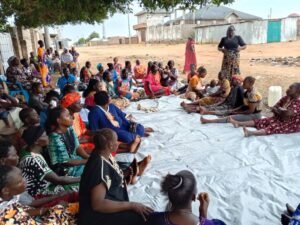
Women and girls in South Sudan are faced with low literacy levels due to culture, economic, social and political obstacles. GVO engaged adolescent girls and young women in GVO-GBV clubs in targeted schools in Juba, Bentiu, Torit and Wau. GVO empowers the GBV club members with strategies on GBV prevention, also to address obstacles they may experience as hinderances to their education. The interactive GBV club members focus on peer-to-peer support, and also doing awareness raising in community on pertinent GBV issues through dramas, dance, songs, radio talk shows and peer counselling sessions. GVO also engages out of school adolescents and young women at their safe spaces so as to equip them with basic literacy and numeracy education.
Humanitarian Assistance
South Sudan ranks the second most vulnerable country to natural hazards in the world, according to the 2024 INFORM1 Risk Index. The sporadic armed clashes and intercommunal violence and extreme climate shocks such as floods, droughts and heat stresses that occur multiple times, giving communities no time to recover. According to the Humanitarian Needs & Response Plan (2025), 9.3 million people (70% of the population) need assistance with over 5.5 million people in need of urgent protection support due to conflict, displacement and climate crisis, with women and children increased risks of GBV. The humanitarian crisis has resulted into public health challenges, strained livelihoods and hampered access to water, sanitation and hygiene (WASH), and education. The situation is worsened by the 2024 Sudan crisis deepening people’s needs and demanding an urgent expansion of response capacities. Protection concerns therefore remain high, especially for women and girls.
GVO provides humanitarian assistance to vulnerable groups including women, children and survivors of GBV etc through distribution of NFIs, hygiene kits, temporary shelters etc. these interventions enhance community resilience through disaster risk reduction and capacity-building initiatives and community-based emergency preparedness. GVO achieves better response outcomes through its work with local, and national partners which supports its commitment to humanitarian principles and gender-sensitive approaches in crisis response.